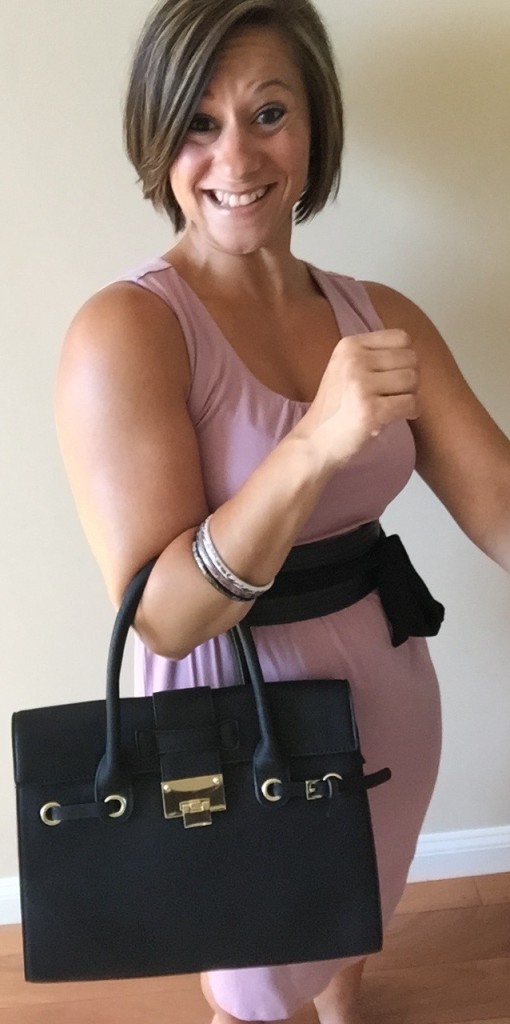
In 2009 I lost 30 pounds and it totally transformed my life. I know: old news; you’ve heard it before. And probably many times from me. You might even be aware of the fact that since my total transformation, I’ve led a pretty nontraditional life. The thing is, I have some severe narcissism regarding nontraditionalism, to the point that those who do not favor my nontraditional views – do not exist to me. Ok, maybe that’s a little harsh. But since leading a transformed life, my patience for antiquated ideas and long-established traditions that do anything but promote equality among all people – has vanished. Sure, let me elaborate.
First off, you’ve heard me say before that losing weight was not just about losing weight. The choice to take control of my wellness was the first choice I had made for myself, maybe ever. It was the one thing I had struggled with my whole life, and finally admitting that I had a problem – and further choosing to do something about it – was quite possibly one of the most defining moments in my life. The journey that followed proved just that. When I started losing the weight, I started realizing that it really wasn’t that hard. And it made me question what other seemingly “hard” things I’d avoided as well. Much like the Prego commercials where someone asks themselves what other questionable choices they’d made prior to choosing the right pasta sauce, I was wondering the same. But just like the choice to eat Prego only from now on, I decided to start making the hard choices always. By the very definition, it wasn’t easy, but it was damn rewarding. Momastery has been saying it for years now, but We CAN Do Hard Things, and it is an amazing feeling when we do.
One of the hard choices I had avoided for much of my life was consistently standing up for what I believed was good and true and right in this world – especially when it came to how other people should be treated. Yes, I had moments during my nontraditional upbringing where I would point out to people that their words and views were hurting other people’s feelings (e.g., phrases like “that movie is retarded” and “your backpack is gay” didn’t fly with me). But in my desperate need to not ruffle any feathers, I rarely said or did much else, even if I thought otherwise. I know that’s probably true of most of us; we aren’t all activists, even if our beliefs and values are in the right places.
In my lifetime, and given where I was raised, there wasn’t a lot of adversity that I was a part of, or would have even needed to stand up to. I grew up in a town that was predominantly Jewish, but I was not. But I wasn’t Christian either. I had (and still have) no religious identity, so I never suffered persecution of any sort – but I never saw my friends suffer, either. I also grew up in a town that was predominantly white and wealthy, which I was (somewhat). Our town was part of the METCO program, where kids living in inner-city Boston would take a 45 minute bus ride in the morning just to come out to our tiny town to get a supposed better education. I could say too much about my personal views on the psychological implications the METCO program has on those inner-city kids, but instead right now I just want to say that the METCO program provided me with the only example of racial diversity I had in my childhood. In our ugly, pubescent, blemish-ridden, middle-school years, we were all equally awkward and uncomfortable, so in essence we were all the same – regardless of skin color. Growing up with my mother’s best friend being gay (my “gay uncle”), and many of my parents’ friends in theater also being gay, it was just another trait, like eye color and hair color. By middle school I already had friends who were out, and again, they were no different than me. When I moved to Boston in 2003, I was obviously surrounded with the most diversity I had faced in my life to date – race, class, age – it was a whole new world. And although everything and everyone was different than what I knew in so many ways, it was the biggest reminder that we are all different – which means we’re also equal.
I took very strongly to the civil rights movement when it was taught to me in middle school. You might even say I became a bit obsessed with it for a while. Same was true of the Holocaust teachings. Later of the Matthew Shepard story. That might sound a bit morbid or unhealthy – but it was the utter shock and disbelief that people did hold such strong negative views about people they didn’t even know – and that they would take such horrific action based on those beliefs. I’ve never understood it, and I never will, so I stopped trying to. Instead, I just vowed to never be like them. And whether I stand up on a soap box and preach it or not, I know that I have never been like them.
I’m still not an activist, but now I am an active example of a nontraditional choice – many in fact. I believe in being 100% authentically you and never letting anyone shame you for your choices (yes, that also applies to those who judge wholeheartedly and unfairly – but I still won’t put an asterisk after that statement and amend it to say *but only if your views are right and fair and just). I believe, no matter what, that everyone gets the benefit of the doubt. Give them that, always give them that. And I know ignorance, actual lack of knowledge, does account for so many of the types of beliefs that I just don’t tolerate. Even our closest friends and family members don’t know everything about our lives or loves. It feels just as wrong for me to judge a broken marriage portrayed in Hollywood as it does to judge that of a best friend or family member. There is always just so much we don’t know about other people. But it is not my job to teach it all. I lead by example only, but my life is full and busy and complicated as it is – I don’t know how to also provide the lessons that tell someone not to judge people by their appearances. An uncut lawn doesn’t mean someone doesn’t have pride in their home; maybe it means they would rather spend what little free time they have with their family rather than mowing their grass. A pair of Nike sneakers on a middle school kid who is bussed in from Boston doesn’t mean his parents are irresponsible or frivolously spending their money; maybe it means they want their son to fit in and feel psychologically secure with friends and not have to be the outsider in every single way. An age gap between two people in a relationship doesn’t mean that it won’t last; maybe love just has its own timetable and it doesn’t matter how old you are but rather how open you are. The lessons are there, it’s teaching people to open their eyes that is the difficult part.
I admittedly don’t know everything, but I also know that no one else does either. And as our social world continues to evolve, all I know is that keeping a tight grasp on tradition, simply because it is what we know, can really make a mess of things. Treating others with decency, kindness, and respect is the only acceptable option. And as someone who spent years before straying from tradition to make one choice that changed every day that followed, I know how invaluable the nontraditional approach is.
Narcissism is defined as the pursuit of gratification from vanity of egotistic admiration of one’s own attributes. And so not only will I take a nontraditional meaning of this word by proudly applying it to myself, but I will further say that I greatly admire my nontraditional approach to life and choose only to associate with others who do the same. If you refuse to open your mind enough to believe in change, then I only have two words for you: Bye Felicia.